
About Nordvar.
Nordvar is in development. A first site is being evaluated in Iceland. The project is at an early stage and is not yet operating or funded. Progress is shared directly with the people involved rather than announced here.
Removal that lasts.
Why removal
Reducing emissions comes first. But some carbon dioxide is already in the atmosphere, and some emissions will remain hard to avoid for decades. Taking carbon dioxide back out of the air, and keeping it out, is the other half of the task. Direct air capture is one of the few ways to do this that can be measured precisely and placed almost anywhere.
Why geological storage
Where the carbon goes matters as much as how it is captured. Trees can burn. Soils can release what they hold. Rock does not. When carbon dioxide is injected into basalt it reacts with the minerals around it and becomes solid carbonate - the figures below say how quickly, and for how long. Nordvar sites are chosen where this kind of storage is available.
How it is counted
A removal only has value if it can be shown to have happened. Every tonne is measured at capture, tracked to injection and verified by an independent body against a recognised standard. Tenants and buyers receive documentation for exactly what was removed on their behalf.
Honest limits
Direct air capture is energy-intensive and, today, expensive. It is not a substitute for cutting emissions and it is not yet cheap. Nordvar's design lowers the energy cost by reusing heat that would otherwise be wasted, and places the plant where power is renewable and storage is close. That makes the economics better, not free.
The right places already exist.
What a site needs
Iceland first
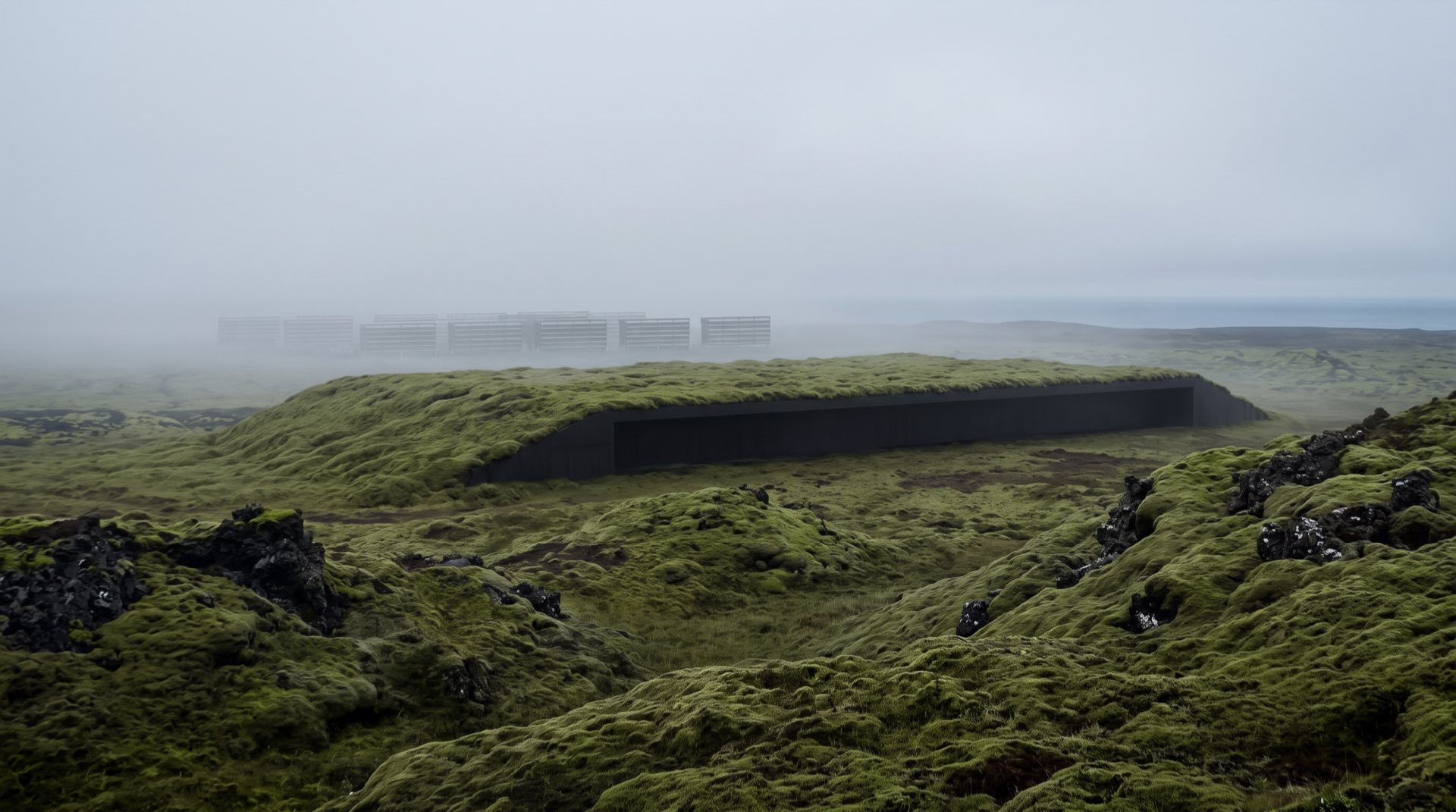
Iceland combines all four. Its electricity is almost entirely hydro and geothermal, its climate is cold, its geology is suited to mineral storage, and it has hosted operating direct air capture with mineral storage since 2021. There is also local demand for captured CO₂: Iceland's plans for synthetic fuels give it a use as well as a store. A first Nordvar site is being evaluated there, in an area with existing industrial infrastructure, grid access and proximity to mineral storage. The exact location will be published when a site is secured. The approach is not tied to one country: any region with the same four conditions is a candidate for later sites.
The company
Nordvar is a Swiss start-up in formation. Organisations involved are named when they have agreed to be.
How we work
- 01Say what is known and what is not. Estimates are labelled as estimates.
- 02Build the smallest thing that proves the next thing.
- 03Every tonne counted once, every claim traceable to a record.